In Memoriam
Arlen Davison
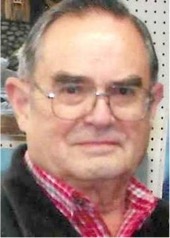
Arlen D. Davison, 88, professor emeritus and extension plant pathologist, former department chair of the Department of Plant Pathology, Washington State University (WSU), passed away on July 12, 2021, in Pullman, Washington. Davison was born in Hastings, Nebraska, the eldest son of Lannis D. and Esther M. Davison and grew up in Laramie, Wyoming. Following graduation from Laramie High School, he earned a B.S. degree in agronomy in 1955 and M.S. in plant pathology in 1956 from the University of Wyoming and Ph.D. in plant pathology and entomology from Oregon State University in 1962. Davison worked as an extension plant pathologist at the University of Arizona from 1963 to 1967 before coming to WSU where his research focused on agricultural industries and urban gardening problems of western Washington. During his time at WSU, Davison worked with the Western Washington Research and Extension Center (WWREC) in Puyallup as an extension plant pathologist. Davison served as the State Extension Agriculture and Natural Resource Program leader in 1973, as a legislative liaison to the Washington State legislature from 1986 to 1999, and on the Washington State Agricultural Pesticide Advisory Board. He established a Plant Disease Clinic with Roy Davison, helped found the Master Gardeners’ clinics and volunteer program. Davison was the chairman of the Department of Plant Pathology at WSU from 1981 to 1986 and returned to Puyallup in 1986 to become Superintendent of the WWREC and served as assistant dean of the College of Agriculture and Home Economics for the Puyallup, Mt. Vernon, Vancouver, and Long Beach units of WSU until his retirement in 2003. In addition to several academic journal articles and nearly a hundred extension publications, Davison co-authored the book How to Identify Rhododendron and Azalea Problems. In 2002, he was named an “Outstanding Alum” by the College of Agriculture and Home Economics at the University of Wyoming in recognition of his part in the creation of the concept and development of the original Master Gardener Program.
Davison’s volunteer activities included the Boy Scouts of America, Kiwanis, and Northwest Trek (a wildlife park). During the Lewis and Clark Bicentennial, he developed and presented programs at Trek and to service clubs, public schools, libraries, and churches. In addition, he was a skilled in leather crafts, making Lewis and Clark costumes and period clothing for Cowboy Action Shooting, in which he participated for 10 years. He also enjoyed success in landscape oil painting. A lifelong member of the Presbyterian Church (USA), he served as an ordained Elder in First Presbyterian Church in Puyallup, member of the choir and served on local and Presbytery committees. He co-chaired a pastor nomination committee and a capital stewardship campaign. He served as a reserve infantry officer attaining the rank of Captain before being honorably discharged.
While enjoying a successful career in higher education at three universities, Davison’s greatest joy and satisfaction was in and with his family. He and Nancy shared a devoted and happy marriage of 63 years. There is no greater reward than having the love and devotion of one’s children and grandchildren. Arlen is survived by his son Timothy and wife Brenda, grandsons Keith (Heather), Sean (Lauri), and Kyle; son Robert and wife Cynthia, granddaughter Emma and grandson Lannis; daughter Sarah Davison Hatley and husband Kevin, granddaughters Lauren and Rebecca and grandson Ryan (Abby); and great granddaughters Kristen, Lily, Cora, and great grandson Jackson due in mid-September. Davison was proceeded in death by his loving wife Nancy and his brother James C. Davison.
Roland F. Line
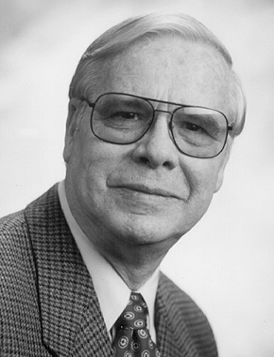
Roland F. (Rollie) Line, Research Plant Pathologist, US Department of Agriculture, Agricultural Research Service and adjunct professor, Washington State University, passed away in his home at Pullman, WA on June 4, 2017 at the age of 83. He was born in Winona, MN, on January 11, 1934 and graduated from high school at Cromwell, MN, in 1952. He received his B.S. (1956), M.S. (1959), and Ph.D. (1962) degrees in plant pathology and genetics from the University of Minnesota. As a research associate at the University of Minnesota (1959 to 1963), he was responsible for research on the ecological potential and survival of the stem rust pathogen. He demonstrated that it was possible to create isolates of Puccinia graminis that were more aggressive at low temperatures and that selection for aggressiveness at low temperatures reduced aggressiveness at high temperatures. With coworkers, he showed that new races could arise by sexual and somatic crosses between Puccinia graminis f. sp. tritici and Puccinia graminis f. sp. secalis.
During 1963 to 1968, Dr. Line led a cooperative U.S. Army, USDA, and experiment station project on stem rust epidemiology and loss assessment from Oklahoma to North Dakota. It was the most innovative, extensive, and comprehensive study of its type in the history of cereal rust research, and it set the stage for subsequent research on the subject. In 1968, Dr. Line assumed the leadership of a USDA program for the control of rusts and smuts at Pullman, WA. Stripe rust and flag smut were the most urgent problems facing the wheat industry in 1968, but within 3 years, he implemented a control program that reduced flag smut to a minor disease, saving the wheat industry millions of dollars and preventing loss of important export markets.
After he joined the USDA-ARS cereal disease program at Pullman, WA in 1968, Dr. Line established a rust research program that had an even greater impact on the wheat industry. He developed a monitoring program that provided early warning to breeders and growers to enable them to take action to prevent major losses. He identified the environmental and managerial factors that contribute to rust epidemics and, with Stella M. Coakley, developed the first working model for predicting stripe rust. After 1979, he used predictive models and monitoring data to forecast wheat stripe, leaf, and stem rust, and this program proved equally effective in predicting barley stripe rust. Dr. Line and his students and postdoctoral associates used data on rust virulence and DNA polymorphism to develop concepts on the evolution of the stripe rust pathogens, the relationships among pathogenic forms and races, the origin and distribution of races, and the genetics of virulence and resistance.
In cooperation with Pacific Northwest wheat breeders, Dr. Line identified several unique types of resistance to stripe rust, including the most useful type, high-temperature, adult-plant (HTAP) resistance. Because of his research, over 45 wheat cultivars with HTAP resistance have been released and over 90% of the wheat acreage is planted with durable, HTAP-resistant cultivars. Use of HTAP resistance and multiline cultivars has prevented multimillion dollar losses to the wheat industry. Dr. Line contributed to the release of two multiline, durable resistance cultivars that are among the few multiline cultivars in the world that are extensively grown. Dr. Line and coworkers identified numerous genes in wheat and barley for use in breeding for resistance. He and his coworkers developed a new, widely acclaimed technique for efficiently identifying molecular markers associated with resistance genes.
Dr. Line was the first U.S. scientist to show that application of systemic, foliar fungicides was a feasible approach for the control of wheat rusts. Use of fungicides in 1981 prevented losses of more than $3 million in Washington State alone. Subsequently, Dr. Line and his associates developed a computerized, expert system called MoreCrop (Managerial Options for Reasonable Economical Control of Rusts and Other Pathogens) for predicting and managing wheat diseases. It was widely used by growers, teachers, scientists, and advisors.
Dr. Line is recognized for his wealth of knowledge, experience in plant pathology and genetics, and his international reputation for excellence. He was an authority on cereal rusts and smuts, expert systems, disease forecasting, crop loss assessment, chemical control, resistance, and disease management. He published more than 70 refereed papers and book chapters, and more than 260 technical publications. Dr. Line served as the major advisor for 14 graduate students and guided at least seven postdoctoral fellows and visiting scientists.
Dr. Line served on numerous national committees including the National Wheat Improvement, the Wheat Crop Advisory, and the Wheat Crop Germplasm. He also served on numerous APS committees including Collections and Germ Plasm, Disease Control, Epidemiology, Genetics, Integrated Pest Management, and Office of International Programs. He was a member of the USDA TCK team that provided the biological justification for removing the Chinese import barrier to Pacific Northwest wheat. In recognition of his contribution to wheat research and the wheat industry, he was a recipient of the O. A. Vogel/Crop Improvement Award, USDA Certificates of Merit, American Phytopathological Society (APS) fellow, and APS Pacific Division Lifetime Achievement Award. His dedication to his profession is unquestioned and, with the exception of the 1963 meeting, he attended every national APS meeting from 1956 to his retirement in 2000.
Dr. Line was a modest man who seldom talked about himself and his many accomplishments. Because he eschewed self-promotion his significant work was not as widely known as it should have been.
Dr. Line was preceded in death by his father and mother, and his brother Jerry Line. Surviving are his wife of 54 years, Frances Line; his sisters Ina Jobe, Kathy Olson, twin sisters Laurie Conley and Linda Kedrowski; and brothers Frank Line, Donald Line, and John Line.
Jack Rogers
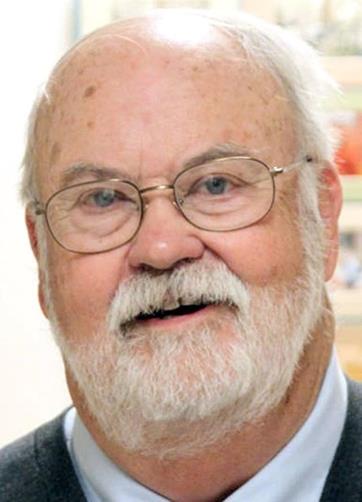
Jack D. Rogers, 83, regents professor emeritus at Washington State University (WSU), died peacefully at his home in Pullman, Washington on June 14, 2021 after a long illness.
Rogers was a nationally and internationally renowned mycologist, dedicated and inspirational educator, avid hunter and fly fisherman, a wonderful humorist and most of all a dedicated husband to his wife, Belle, and father to his twin daughters, Rebecca Ann (Hines) and Barbara Lee (Cooper). He will be sorely missed by his family and international network of colleagues, friends, and former students.
Rogers was born September 3, 1937, to Jack Rogers (Youkobis Uzskuriatis) and Thelma Rogers (née Coon), both school teachers in Point Pleasant, West Virginia. After graduating from Point Pleasant High School in 1955, Rogers attended Davis and Elkins College (W.Va.) in a five-year cooperative program with Duke University (N.C.) and earned a Bachelor of Science from Davis and Elkins and a Master of Science in Forest Management from Duke. He went on to earn his doctorate in plant pathology from the University of Wisconsin, Madison in 1963.
At the start of his junior year at Davis and Elkins, Rogers met fellow student Belle Clay Spencer, daughter of University of Virginia chemistry professor Dr. Hugh M. Spencer and Thomasia Spencer (née Hancock). They married in June 1958 at Belle’s family home in Charlottesville, Va., and began a 63 year-long devoted marriage. They were blessed with twin daughters, Rebecca and Barbara, in June 1964.
In 1963, Rogers joined the faculty of WSU’s College of Agriculture, beginning an educational career in the plant pathology and forestry departments that spanned half a century. He taught forest tree pathology and advanced mycology, and served as a major professor and adviser for graduate and post-graduate students. He rapidly rose through the ranks to become a full professor, and served as the chairman of the department of plant pathology from 1985 until 1999. An international authority on xylariaceous fungi, he authored and co-authored more than 230 scientific papers and two mycological books. He traveled the world on mycological research and specimen-collecting trips, but far and away his first priority and passion was teaching his students. His many awards for educational and scientific excellence included the R.M. Wade Award for Instruction (1967); serving as president of the Mycological Society of America (1978); the Sahlin Faculty Excellence Award for Research, Scholarship, and Arts (1986); and the Mycological Society of America Weston Award for Teaching Excellence (1992). In 2004, he was honored with the Mycological Society of America’s Distinguished Mycologist Award. Additionally, he received the Library Excellence Award for Service to WSU Libraries in 2005. Rogers received the WSU Eminent Faculty Award in 2006 and was promoted to Regents Professor in 2007. He was the subject of a book of tributes from colleagues edited by former student and retired WSU professor Dean A. Glawe.
In addition to Rogers’s professional accomplishments, he was also an enthusiastic outdoorsman, a friend to many and a legendary humorist. He particularly enjoyed hunting pheasant and quail on the breaks of the Snake River, and fly fishing in rivers and lakes across the Pacific Northwest. Rogers was a regular at his two coffee groups as well as the Pullman Presbyterian Church’s Men’s Bible Study, and enjoyed visiting with his many colleagues and friends. Rogers loved a good joke or humorous story and had the rare ability to remember and retell every entertaining anecdote he ever heard. Whenever he said “That reminds me of a story …” it indicated that whomever he was with would soon be laughing until their sides ached.
Rogers is survived by Belle, his loving wife and constant companion of 63 years, and his daughters and their families: Becky and husband Warren of Papillion, Nebraska, with twin grandsons Ethan and Gareth; and Barbie and husband Brad of Martinez, California. He is also survived by his sister Mary Ann Mansour and husband George of Lansing, Michigan; his sister Nancy Sanders and husband Larry of Williamsport, Pennsylvania; and many nieces and nephews.