Welcome to the Department of Plant Pathology at WSU!
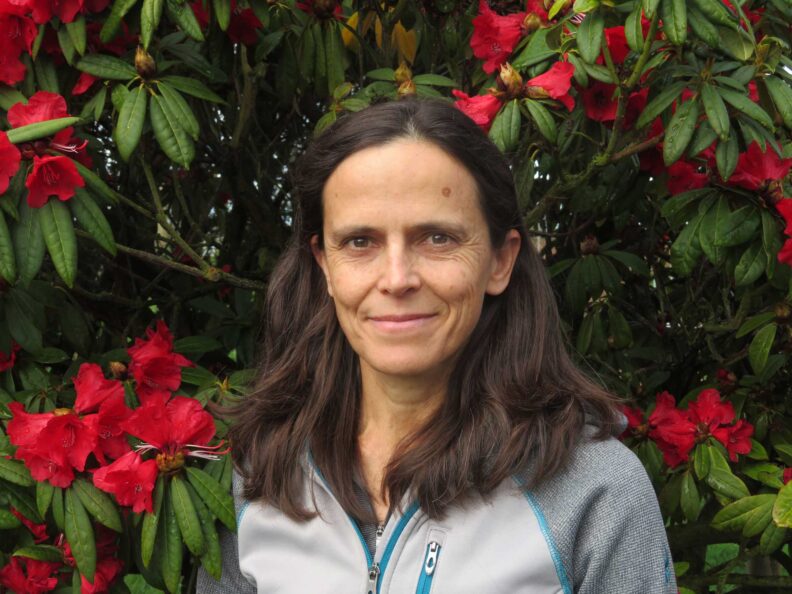
Welcome to the website for the Department of Plant Pathology at Washington State University! If you are looking for information on graduate degree opportunities, employment or professional development opportunities, or want to learn more about the research, teaching, and extension programs carried out by faculty in our department, the links on this website should lead you to this information.
I encourage you to visit the Department News and Events page, follow us on X (@WSUPlantPath), read recent issues of the Spore Print Newsletter to learn about recent activities in the department, and review the fascinating history of the department from 1891-1989 (pdf), written by George W. Bruehl.
Faculty, staff, postdoctoral research associates, and students in the Department of Plant Pathology are located on the main Pullman campus of WSU as well as at the four Research and Extension Centers located around the state: WSU Mount Vernon NWREC, WSU Prosser IAREC, WSU Puyallup REC, and WSU Wenatchee TFREC. Our department houses several USDA-ARS research groups, with the USDA ARS scientists holding adjunct faculty appointments in our department.
We also house the Charles Gardner Shaw Mycological Herbarium on the Pullman campus, with ~75,000 specimens of fungi available through online databases such as the MyCoPortal (Mycology Collections Portal) database. In addition, WSU has a Plant Diagnostic Clinic on the Pullman campus and a Plant & Insect Diagnostic Laboratory at the WSU Puyallup REC.
The Department of Plant Pathology offers one of the more comprehensive plant pathology programs in the USA. Our faculty engage in diversity of research and extension activities that address biological, molecular, epidemiological, and biotechnological investigations into diverse groups of microorganisms that threaten the sustainability and profitability of the many economically important plant species grown in Washington State, the greater Pacific Northwest, nationally, and internationally. Protecting plants from destructive diseases and ensuring plant health using environmentally sound and sustainable strategies are some of the strengths of the programs in our department. Our faculty are committed to excellence in research, teaching, extension, and student mentoring, which has resulted in a number of awards: Alexopoulos Prize, NIFA Partnership Award, Mentor of the Year, Fulbright Scholar, Fulbright Specialist, Regents Professor, Eminent Faculty, Woman of Distinction, Kenneth Morrison Extension Award, Fellow of the American Phytopathological Society (APS), Fellow of the American Association for the Advancement of Science, APS International Service Award, APS Excellence in Extension Award, APS Excellence in Teaching Award, APS Excellence in Regulatory Affairs and Crop Security, The William H. Weston Award for Excellence in Teaching from the Mycological Society of America, WSU Sahlin Award for Excellence in Teaching, and Sahlin Award for Excellence in Outreach and Engagement, just to name a few. Our Emeritus Faculty include a former president of WSU, and a member of the US National Academy of Sciences.
The WSU Department of Plant Pathology has one of the larger plant pathology graduate programs in the country. Our faculty and staff are committed to the success of students. We offer a diversity of professional development opportunities to graduate students, and graduate students from our department include Fulbright, ARCS, and FFAR Fellows. Our graduates have embarked on successful careers in academia, government, industry, and non-profits regionally, nationally, and internationally. Reflecting some of the pioneering research by our faculty, newly discovered organisms have been named after some of our peers! Two faculty were immortalized by their peers when new genera or species of fungi were named after them: The genus Carrismyces named in honor of mycologist Lori Carris, and the species Curvibasidium rogersii and Poroleprieuria rogersii named after mycologist Jack Rogers!
I hope you find the department website to be valuable. With best wishes,
Lindsey J. du Toit
Department Chair